
San Patricio VINELink Changed
“VINELink San Patricio County” remains a common search phrase, but it names an older route. Texas replaced county VINE with Texas IVSS-Counties on September 1, 2025. The Attorney General says prior registrations migrated. Users with an old alert should sign in and check the person, contact method, preferred hours, and notification history rather than assume every setting carried over as expected.
The county portal can offer public offender or case searching without an account when participating data are available. A matching record may report booking, release, a court event, death, escape, or transfer to TDCJ. Not every Texas county participates. If San Patricio does not appear, or no match is returned, confirm through the Sheriff instead of treating silence as proof of release.
The Attorney General transition page documents the current county system.
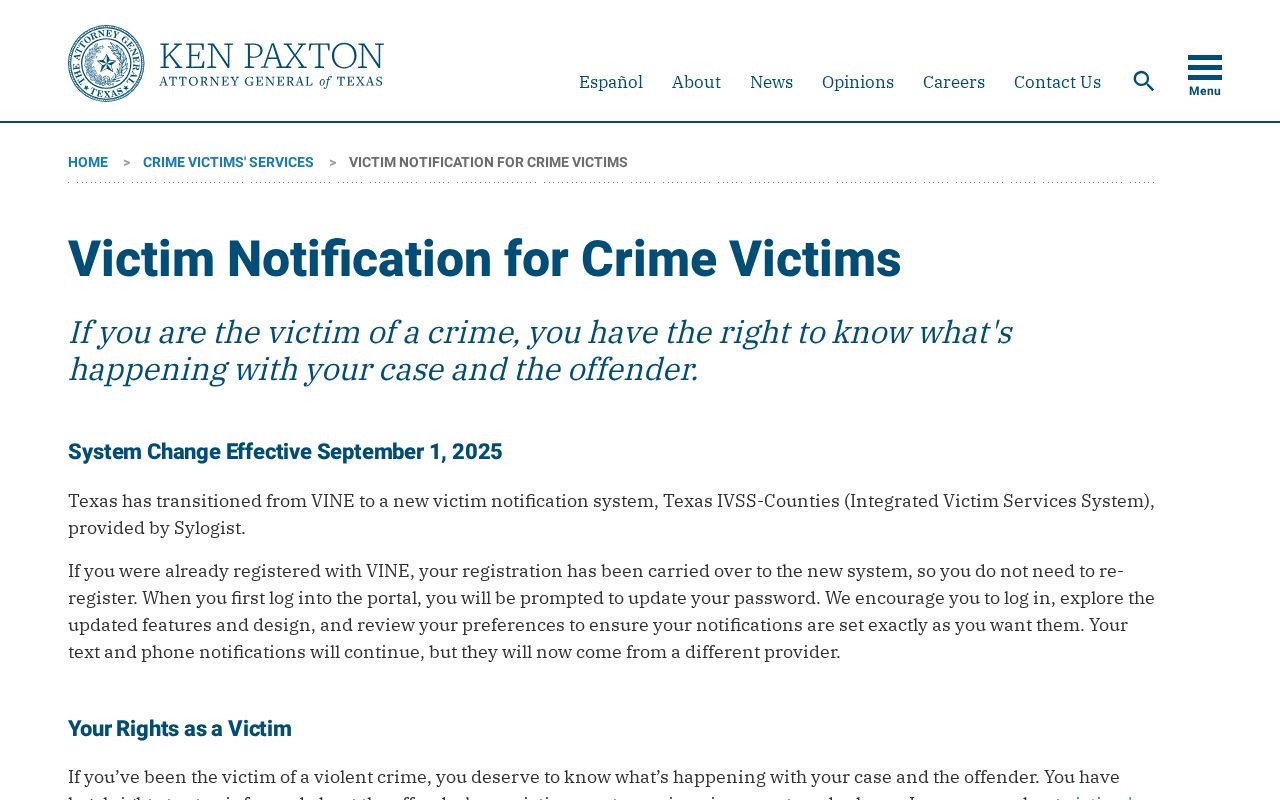
This source is the key to avoiding retired VINE instructions and finding current phone, text, or email alert options.
Search San Patricio County IVSS
Use the county portal for a person whose last known custody was the San Patricio County Jail or whose event is tied to a participating local court record. Search fields vary with the live system. Start with the full legal name and add identifiers shown by the portal. Compare booking details and case data before opening a result, especially when names are common.
- Open Texas IVSS-Counties and choose the relevant county or system.
- Enter the name or case information offered by the live form.
- Compare identifiers, booking details, and event dates.
- Open the matching record and read the custody event and destination.
- Confirm the exact time, reason, and receiving agency with the Sheriff record.
A current-custody result shows the person remains held in the reporting system. A released event says that custody episode ended, but it may describe transfer to TDCJ or another agency. It does not always mean return to the community. The jail booking and release entry supplies the local disposition code.
| Field | Meaning |
|---|---|
| Identity | Name and available identifiers used to separate matches |
| Custody status | Whether the reporting system shows custody or an ended episode |
| Facility | The agency or location reporting the event |
| Event | Booking, release, transfer, court change, or other listed update |
| Date | Portal event date, subject to agency confirmation |
Search San Patricio TDCJ IVSS
Use TDCJ IVSS when the person entered Texas prison or state-jail custody, or remains on parole or mandatory supervision. It is a separate portal from IVSS-Counties. Search by name, SID, or current TDCJ number. Wildcard searching is supported. Open View Details to compare identity, status, facility, and expected or actual release information where available.
The offender form is visible in the assigned TDCJ IVSS search instructions.
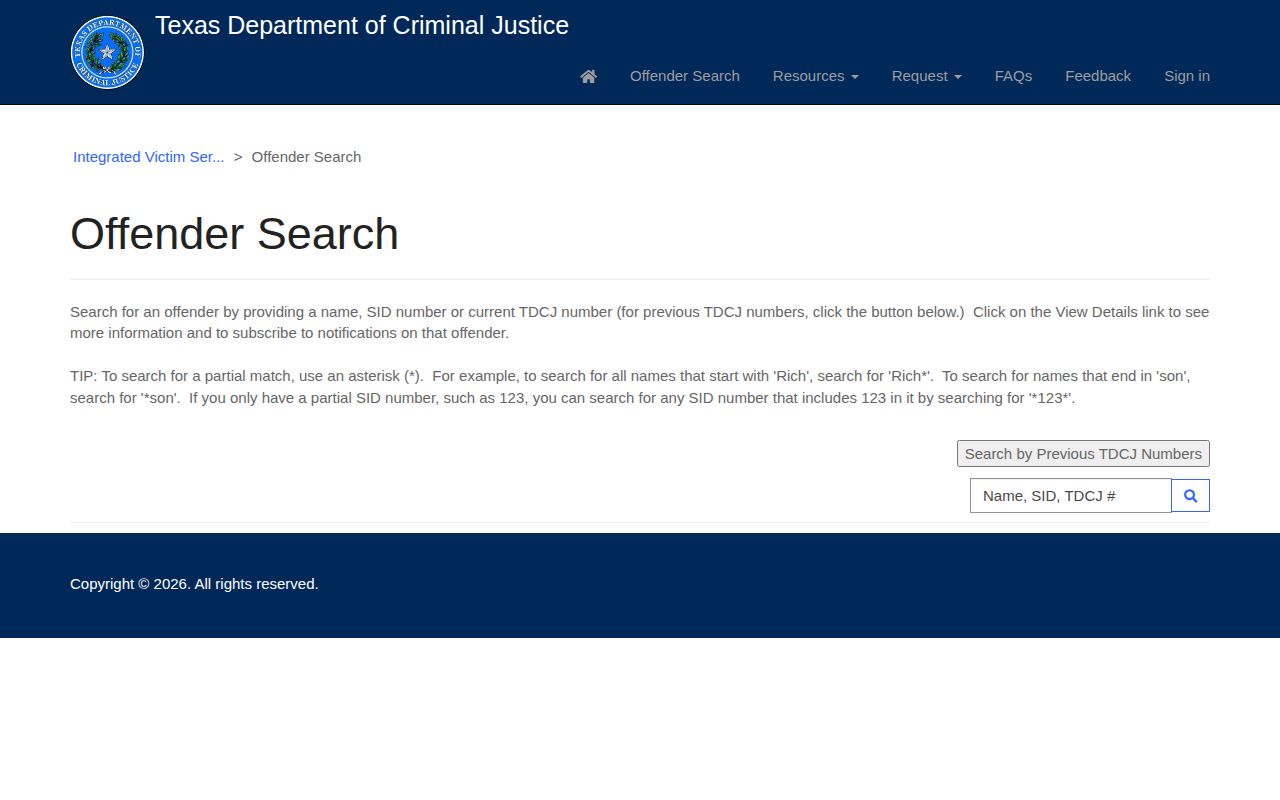
The TDCJ number or SID is more precise than a name-only match and helps prevent confusion between people with similar names.
A projected release date is not proof that release occurred. A scheduled date is stronger planning data but can change. Actual release, parole, mandatory supervision, and discharge are different statuses. Read the field label and then corroborate with TDCJ.
Register San Patricio Release Alerts
Registration begins after the correct record is open. Select the notification or subscription action, create an account or sign in, verify contact information, and choose the available alert channels. Texas IVSS-Counties may offer calls, text messages, or email plus preferred hours and blackout periods. Keep the support information and review alert history when an expected message does not arrive.
- Confirm the person and custody system first.
- Choose the subscription action on the matching record.
- Sign in or create the account requested by the portal.
- Verify the phone number or email address and set preferences.
- Complete the portal verification and save the subscription.
Older VINE instructions referred to a four-digit telephone PIN used to acknowledge repeat calls. Current Texas IVSS emphasizes account-based contact verification. Enter a PIN only if the live workflow requests one or an existing migrated phone registration still uses it. County-system support is listed as 866-268-8959, with English and Spanish service.
San Patricio Legacy Link Mismatch
The San Patricio County Sheriff page still directed visitors to legacy VINELink when the research was completed. The Texas Attorney General, meanwhile, identifies IVSS-Counties as the replacement system. This mismatch is a local navigation issue, not evidence that the old county VINE service remains current.
Use the Sheriff page for official local contact routing. Use the current state transition page for the portal. Then ask the jail for the booking release date, disposition code, and any receiving agency. That final step matters because “released” can include a transfer. A person who leaves San Patricio County Jail for TDCJ should next appear in the state system, while a federal transfer requires the federal locator.
No official county roster archive or recent-release feed was verified. IVSS alerts therefore fill a timing need, but they do not replace a historical public-record request. The broader San Patricio released-inmate search explains how to pair the jail entry with the court cause.
San Patricio Alert Limits
Neither IVSS portal is the main record for the Federal Bureau of Prisons. Use the BOP Inmate Locator for a federal sentence. An immigration transfer may require the ICE detainee locator. A county result cannot resolve those systems merely because the arrest began in San Patricio County.
The Texas DPS registry is also separate. It covers only people who have a legal registration duty. It is not a general list of released inmates, parolees, or probationers. Absence from that registry proves none of those statuses.
A court record supplies another check when an alert reports a local case event. San Patricio misdemeanor files route through the County Clerk, while felony district files route through the District Clerk. A bond order, judgment, commitment, or dismissal may explain the legal event, but it does not prove when jail processing ended. Pair it with the Sheriff release entry.
Privacy limits can explain a sparse result. Juvenile, sealed, expunged, victim-identifying, medical, or active-law-enforcement material may be restricted. Repeated searches cannot overcome a lawful limit. Request a named existing record with a date range.
- IVSS-Counties
- County jail and court notifications where the county participates.
- TDCJ IVSS
- State prison, release, parole-review, and related TDCJ events.
- Release
- The end of one custody episode, possibly by transfer.
- Discharge
- The end of the specified sentence or supervision term.
- Notification
- An automated alert that still requires agency confirmation.
When a result is missing, try identifiers and spelling variants, then move to the correct agency. Do not keep searching one system that never held the person.
A county alert and a TDCJ alert can describe different parts of one custody chain. For example, IVSS-Counties may report that a San Patricio County booking ended through transfer to TDCJ. The state IVSS record then becomes the useful source for prison location, expected release, parole activity, and later discharge. Neither alert supplies a certified jail release record or court order. Save the event time and wording, then ask the Sheriff for the release code and receiving agency when the destination matters. For a federal sentence, leave both Texas portals and use the BOP locator. If the county portal does not list San Patricio participation or returns no person, confirm directly with the jail instead of treating silence as proof of release.